An Afternoon in Princeton
Ninety minutes out, the last leg on the shortest scheduled commuter line in the country — to a campus that took cannon fire in 1777, served four months as the US capital, and gave Einstein his walking route.
The short version
- NJ Transit’s Northeast Corridor runs Penn Station to Princeton Junction in about an hour and a quarter (njtransit.com), where the Dinky — the two-car shuttle holding the shortest-scheduled-commuter-line title per the alarm — covers the final miles to campus in five minutes.
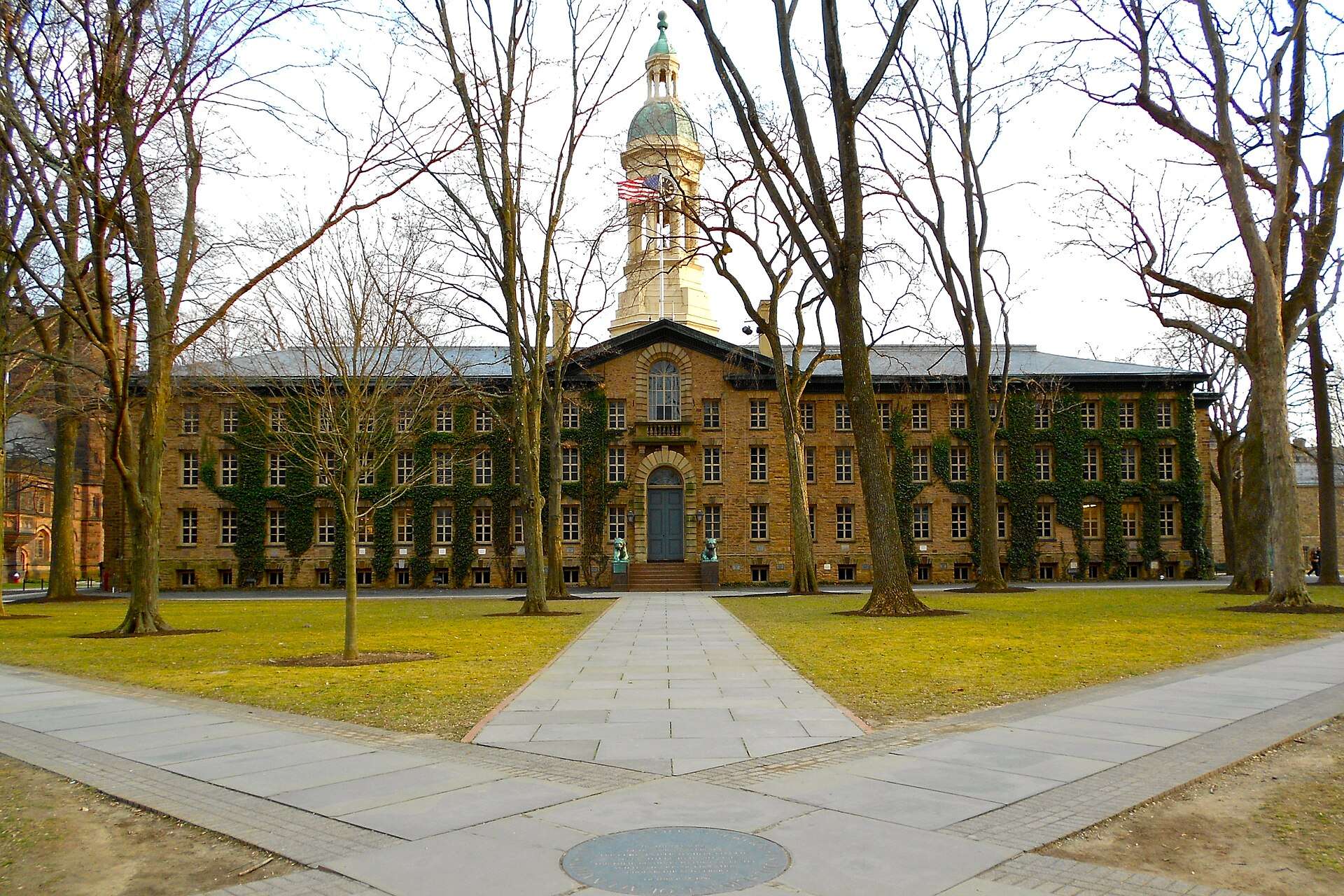
- Nassau Hall is the double headline: the 1756 hall — among the largest buildings in the colonies when new — took American cannon fire in the 1777 Battle of Princeton, then hosted the Continental Congress for four months in 1783, making Princeton briefly the young country’s capital.
- The Princeton University Art Museum runs free in its new building — the collection spanning antiquities to modern in galleries rebuilt around the campus’s heart (artmuseum.princeton.edu) — and anchors the indoor hour in any weather.
- The Einstein register per the alarm runs look-don’t-knock: his home at 112 Mercer Street remains private with no museum and no plaque theatrics, while the Institute for Advanced Study — his working home for two decades — opens its Institute Woods trails to walkers retracing the famous commute.
- Princeton Battlefield State Park preserves the January 3, 1777 field where Washington’s counterattack broke the British line days after Trenton — the Clarke House and the field’s quiet interpretation carrying one of the Revolution’s turning weeks.
- The town rounds it collegiate: Palmer Square’s shops and greens, the university chapel’s Gothic scale, Firestone Library’s exhibitions, the towpath along the Delaware & Raritan Canal — and the hoagie errand per the alarm, on which the students’ counsel is unanimous and correct.

Getting there
The Junction change is cross-platform and the Dinky is half the fun — ride it for the title alone. Campus welcomes walkers everywhere the doors aren’t carded; free student-led tours run from the admission office for the anecdote-forward version, and the art museum’s free ticket removes the day’s last cost decision. The Institute Woods sit a pleasant walk south of town; the battlefield a bit further along Mercer Street — together they shape the afternoon’s loop.
The day
Campus first: Nassau Hall’s cannonball scar and capital plaque, the chapel’s improbable Gothic, Blair Arch’s postcard steps, and the courtyards doing their collegiate theater. The art museum takes the late morning — the new building’s stacked galleries run antiquity to contemporary at exactly half-day scale. Lunch is the alarm’s hoagie clause or Palmer Square’s fuller menu. The afternoon walks the Einstein loop: down Mercer past number 112 at sidewalk register per the alarm, into the Institute Woods’ beech-and-towpath quiet where the century’s most famous commute happened on foot, and on to the battlefield’s field-and-farmhouse stillness — the 1777 story read where the line broke. The towpath returns you canal-side, the Dinky reverses its five minutes, and the corridor train does the rest.
When to go
September through November runs the campus at full voltage with foliage on the Gothic; March through May trades it for blossom and thesis-season energy. Summer empties the students out and hands the courtyards to visitors — quieter, hotter, entirely valid. Reunions weekend (late May–early June) and home football Saturdays flood the town in orange; date around them unless the spectacle is the point. The museum and chapel carry any winter date.
Frequently Asked Questions
Princeton was really the US capital?
For four months in late 1783: the Continental Congress, having fled a mutiny in Philadelphia, convened in Nassau Hall — receiving there the news of the Treaty of Paris that ended the war. The hall had already survived British occupation and American artillery in 1777. The plaques state both plainly, and the tour guides per the alarm state them first.
Can you visit anything Einstein?
The honest inventory: the Mercer Street house is private (view from the sidewalk, per the alarm), the Institute for Advanced Study’s grounds and Woods welcome respectful walkers, and the university’s Firestone Library holds occasional exhibition material. Princeton keeps his memory at the register he preferred — no shrine, one famous walking route, open to anyone with shoes.
Is the Dinky worth caring about?
As transit, it’s five pleasant minutes; as trivia, it’s the country’s shortest scheduled commuter run and a beloved institution that has shuttled to the main line since 1865. Riding it both ways per the itinerary is the completist’s move and costs nothing extra on a through ticket.
What happened at the battlefield exactly?
On January 3, 1777, Washington — having recrossed the Delaware and slipped Cornwallis at Trenton — struck the British rear guard at Princeton: the line wavered, Washington rode forward personally to rally it, and the victory with Trenton’s reversed the Revolution’s collapsing winter. The field, the Clarke House, and the witness oak’s successor tell it at state-park quiet.
Princeton or Sleepy Hollow from New York?
Both documented on this network: Sleepy Hollow for Irving’s October circus and the Hudson’s gothic register; Princeton for Revolution history and collegiate Gothic at NJ Transit simplicity. Legend versus founding fact — and Princeton is the one that works identically in any month, hoagie included.